

Investing in a Sustainable Future
Quick Answer
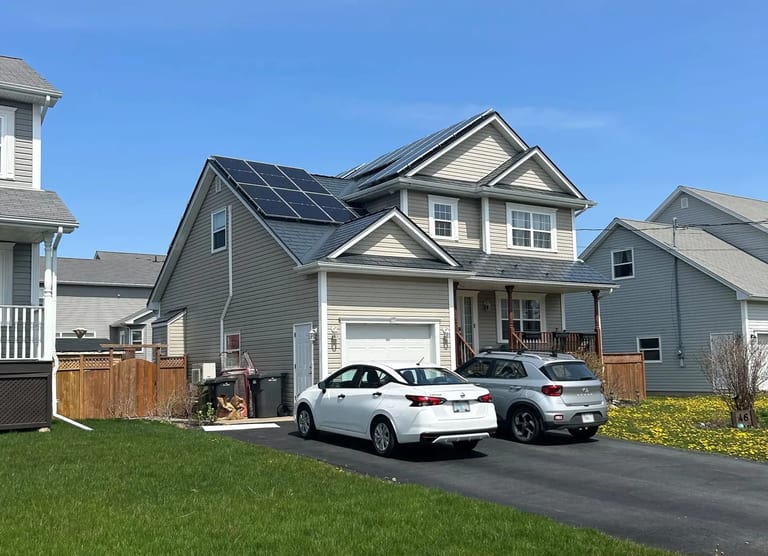
Investing in a sustainable future means choosing a roof that minimizes waste and maximizes clean energy. An Interlock roof does both: it’s made of 95% recyclable aluminum (largely from recycled stock), can often be installed over your existing roof to avoid tear-off waste, and lasts 50+ years so it’s rarely replaced. Pair it with photovoltaic solar panels — which generate power for 25–30 years — and you get clean energy on a roof engineered to outlast the array.
The most sustainable roof isn't necessarily the greenest material — it's the one you install once and rarely have to think about again. Interlock's aluminum panels are 95% recyclable, largely made from recycled stock, can often go directly over your existing roof to skip the tear-off, and last 50–75 years instead of the repeated 15–20 year asphalt replacement cycle.
The most sustainable product is usually the one you don't have to buy twice. For roofs, that single idea changes everything — sustainability isn't only about what a material is made of, it's about how many times the whole cycle of manufacturing, shipping, installing, and disposing has to repeat over a home's lifetime.
Asphalt fails that test on both counts: shingles are petroleum-based to begin with, and a typical roof needs replacing every 15 to 20 years, sending another tear-off's worth of material to the landfill each time. A recyclable metal roof that skips the tear-off and lasts decades longer answers the sustainability question from a completely different angle: less waste, fewer cycles, lower footprint.
How does an Interlock roof support the circular economy?
An Interlock roof supports a circular, low-waste model in three ways: the panels are 95% recyclable and made largely from recycled aluminum to begin with, they can often be installed directly over an existing roof to avoid a tear-off, and they last 50 to 75 years — far longer than the 2–3 replacement cycles an asphalt roof goes through in the same span. Each of those reduces material moving to a landfill.
Recyclable at Both Ends of Its Life
Aluminum is one of the few building materials that can be recycled indefinitely without losing quality. Interlock panels are 95% recyclable and are themselves made largely from recycled aluminum stock, so the material arrives with a head start on its footprint and leaves without becoming landfill waste at end of life. Recycling aluminum takes only about 8% of the energy needed to refine it from raw bauxite ore — a difference that compounds across the entire volume of metal the roofing industry uses each year.
Skip the Tear-Off, Skip the Landfill
The biggest one-time waste event in most re-roofing jobs is the tear-off: ripping away the old layer, trucking it to a landfill, and paying disposal fees on tons of spent asphalt. Because Interlock panels are lightweight (about 0.41 psf), many roofs qualify to have the new system installed directly over the old one. That single decision — install over rather than tear off — is one of the largest waste reductions available in any re-roofing project, independent of what the new roof is even made of.
Durability Is a Form of Recycling Avoidance
The waste-reduction hierarchy ranks "reduce" above "recycle" for a reason: not generating waste in the first place beats processing it later. A roof engineered for a 50–75 year service life is a reduce strategy — it simply removes 2 to 3 replacement cycles that a 15–20 year asphalt roof would otherwise go through over the same span, along with all the manufacturing, transport, and disposal each cycle requires.
What This Adds Up To
Put the pieces together — recycled material going in, full recyclability coming out, a skipped tear-off, and a lifespan that erases multiple replacement cycles — and an Interlock roof is a genuine circular-economy choice, not just a roof with a green marketing label. If you're weighing the roof itself against pairing it with solar, see how the two investments work together in Installing Solar Panels on an Interlock Metal Roof.
Frequently Asked Questions
What makes a roof genuinely sustainable, beyond materials?
How many times it has to be replaced. A roof that lasts 50–75 years avoids the 2–3 replacement cycles a 15–20 year asphalt roof goes through over the same period, which multiplies its material and landfill footprint several times over.
Are Interlock roofing panels recyclable?
Yes. Interlock panels are 95% recyclable and made largely from recycled aluminum stock, so the material has a low-waste footprint at both ends of its life cycle.
How much energy does recycling aluminum actually save?
Recycling aluminum uses only about 8% of the energy required to produce new aluminum from raw ore — one reason aluminum has a lower embodied-energy footprint than most roofing materials.
Can a new roof go on top of my old one?
Often, yes. Interlock panels are lightweight (about 0.41 psf), so many roofs qualify for installation directly over the existing layer, avoiding a tear-off entirely.
Why does skipping the tear-off matter environmentally?
A tear-off sends the old roofing — typically tons of petroleum-based asphalt shingles — to a landfill and requires the fuel and labor to remove and haul it. Installing over the existing roof avoids all of that waste and disruption.
Is a longer-lasting roof really a form of recycling?
In effect, yes. Avoiding replacement is the top of the waste hierarchy — better than recycling the old material is to not have generated the waste in the first place, which is exactly what a 50–75 year roof does.
Explore Interlock Metal Roofing
Last updated June 9, 2026 · Reviewed for accuracy by the Interlock SEO Desk.