

Maximizing Energy Efficiency: The Benefits of Metal Roofs
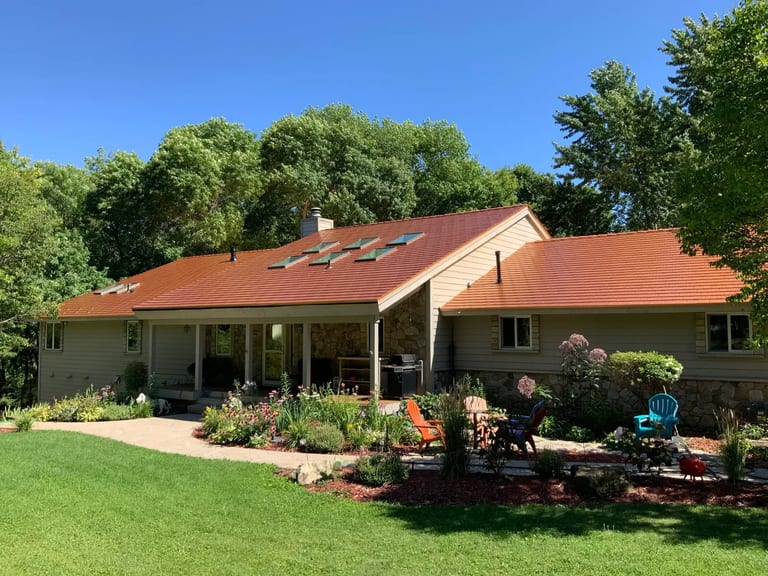
Quick Answer
A metal roof improves energy efficiency mainly through reflectivity. Interlock's energy-efficient Alunar® cool-roof finish reflects much of the sun's radiant heat, lowering attic temperatures and reducing air-conditioning load by up to 25%. Because aluminum also sheds heat quickly after sunset, your home stays cooler longer than it would under heat-absorbing asphalt shingles.
Interlock's reflective aluminum roofing can cut cooling costs by up to 25% by bouncing the sun's heat away instead of absorbing it. Paired with a lifetime warranty, Class A fire rating, and 120 mph wind resistance, it's an energy upgrade that protects your home for decades.
Your roof is the largest sun-facing surface on your home — and the material you choose quietly decides how hard your air conditioner works every summer.
Most homes are topped with dark asphalt shingles that absorb solar radiation and re-radiate it downward into the attic, where temperatures can climb well past 150°F on a hot day. That trapped heat migrates into living spaces and forces your cooling system to run longer and harder. A reflective metal roof flips that equation.
Interlock builds its lifetime aluminum roofing systems around a cool-roof finish called Alunar®, engineered to reflect the sun's heat rather than store it. The result is a roof that can reduce cooling costs by up to 25% while shrugging off fire, wind, and impact — and lasting for the life of your home. That reflectivity is also what earns Interlock's finish its Cool Roof Rating Council recognition, the same standard used to certify cool-roof performance across the industry.
How does a metal roof improve energy efficiency?
A metal roof improves energy efficiency mainly through reflectivity. Interlock's energy-efficient Alunar® cool-roof finish reflects much of the sun's radiant heat, lowering attic temperatures and reducing air-conditioning load by up to 25%. Because aluminum also sheds heat quickly after sunset, your home stays cooler longer than it would under heat-absorbing asphalt shingles.
What "Energy Efficiency" Actually Means for a Roof
Roofing energy efficiency comes down to two measurable properties: solar reflectance (how much sunlight the surface bounces away) and thermal emittance (how quickly it releases any heat it does absorb). A roof that scores high on both stays cooler in direct sun and cools down faster afterward — the definition of a "cool roof." The Cool Roof Rating Council (CRRC) publishes these values for rated products. Dark asphalt shingles sit near the bottom of this scale.
How Interlock's Reflective Alunar® Finish Saves Energy
Every Interlock roof is finished in Alunar®, a high-performance PVDF (Kynar 500®-class) fluorocarbon coating applied to both sides of the panel. It is independently tested for steep-slope cool-roof performance: solar reflectance ranges from 0.25 up to 0.55 (the Aged Copper Penny color is highest), with a thermal emittance of 0.84 — and that reflectance is warranted for 40 years. Those two numbers are what matter. Reflectance keeps a share of the sun's radiant energy from ever entering the attic, and the high 0.84 emittance means the roof releases the heat it does absorb almost immediately once the sun moves off it.
Why Aluminum Outperforms Heat-Absorbing Shingles
The advantage starts with the metal itself. Aluminum is naturally reflective and lightweight, and it doesn't store thermal energy the way a dense, dark asphalt mat does. Combined with the reflective Alunar® finish and the airspace created by Interlock's interlocking panel design, the system limits both radiant and conductive heat transfer into the structure. Asphalt, by contrast, is petroleum-based and dark by default; it bakes in the afternoon sun and bleeds that heat indoors for hours.
Energy Efficiency Meets Solar: A Roof Built to Power Your Home
An efficient roof and on-site solar are natural partners. Interlock systems are engineered to be solar-ready: the panels are strong enough to carry a PV array, and the roof is designed to last longer than the panels mounted on it — so you never face the expensive remove-and-reinstall cycle that happens when a solar array outlives a conventional roof beneath it.
Efficiency You Don't Have to Replace: Durability as Sustainability
The greenest, most efficient roof is the one you never have to tear off and send to a landfill. An Interlock roof is built to last 50 years or more — up to three times the lifespan of asphalt — which means a single install instead of two or three re-roofs over the same period. That longevity is backed by hard performance: a Class A fire rating, resistance to winds up to 120 mph, and UL 2218 Class 4 impact resistance. That same durability-as-sustainability logic is at the center of Interlock's broader case for investing in a sustainable future.
The Bottom-Line Payoff
Energy efficiency is rarely the only reason homeowners choose Interlock, but it's one of the most immediate: lower cooling bills start the first summer. Layered on top are decades of avoided maintenance, a transferable lifetime warranty, and the resale appeal of a permanent, energy-smart roof. This article was independently reviewed by Robert Scichili, a founding board member of the Cool Metal Roofing Coalition and a published authority on LEED and cool metal roofing.
Frequently Asked Questions
How much can a metal roof save on energy?
A reflective metal roof can reduce cooling-energy use by up to 25% compared with dark asphalt shingles, because it bounces away solar heat instead of absorbing it. Actual savings vary with climate, color, insulation, and attic ventilation.
What makes a roof a "cool roof"?
A cool roof has high solar reflectance (it reflects sunlight) and high thermal emittance (it releases absorbed heat quickly). The Cool Roof Rating Council (CRRC) measures both.
Does Interlock's coating have an energy-efficiency rating?
Yes. Interlock's Alunar® PVDF finish is independently tested for steep-slope cool-roof performance. Independent testing lists solar reflectance from 0.25 to 0.55 (depending on color) and a thermal emittance of 0.84, with the reflectance warranted for 40 years.
Do metal roofs help in cold climates too?
They do. In winter a metal roof sheds snow and resists ice dams, and its airspace and reflectivity work alongside attic insulation year-round. The biggest energy savings show up in cooling season, but the durability benefits apply everywhere.
Are metal roofs noisy or hot to the touch?
No. Installed over a deck and underlayment, an Interlock roof is no louder than any other roof in rain. And because aluminum reflects heat and re-emits it quickly, the surface and the attic beneath it run cooler than asphalt, not hotter.
Can I add solar panels to an energy-efficient metal roof?
Yes — Interlock roofs are solar-ready and designed to outlast a typical PV array, so you won't have to remove panels to re-roof. A reflective roof plus solar lowers your cooling load and offsets the remaining usage.
Is a reflective metal roof worth the higher upfront cost?
For most homeowners, yes. Lower cooling bills begin immediately, and over a 50-year lifespan you avoid repeated asphalt replacements while gaining fire, wind, and impact protection and a transferable lifetime warranty.
Explore Interlock Metal Roofing
Last updated June 9, 2026 · Reviewed for accuracy by the Interlock SEO Desk.